

Thinkabout, "a cooperative project for acquiring skills essential to learning", was an instructional program for children, produced in 1979 by the Agency for Instructional Television, in association with various contributing television stations in the United States and Canada. It was distributed to PBS and educational stations across the US and Canada as late as the mid-to-late 1980s. The sixty programs produced were aimed for fifth and sixth grade students to understand their learning process in topics as varied as language arts, mathematics, study skills, as well as thinking skills. Thinkabout was funded by various state and local agencies, with additional support from the Corporation for Public Broadcasting, one of very few CPB-funded programs not distributed by PBS.
Loading episode ratings...

Self Incorporated is a 15-program television/film series designed to stimulate classroom discussion of critical issues and problems of early adolescence. It aims at helping 11 to 13-year-olds cope with the physical, social, and emotional changes they are experiencing."Self - Incorporated" was created under the management of the Agency for Instructional Television through the resources of a consortium of 42 state and provincial educational and broadcasting agencies, with additional assistance from Exxon Corporation.

Trade-offs was an AIT program designed to improve economics instruction in the United States and Canadian schools. The series of fifteen lessons, for children from 9-13, helped students think their way through economic problems and increased their understanding of economics. On a broader scale, it helped them become more effective decision makers and ultimately more responsible citizens. Each lesson consists of a 20-minute color television/film program plus teacher's guide material to facilitate classroom follow-up. Each program begins with a short segment that identifies key points that students and teachers should watch for. This is followed by the dramatization of a fundamental economic problem relevant to the daily life of the student. Special visuals emphasize the economic principles and reasoning processes involved. The last portion of the program introduces, but does not resolve, another problem, and ends by posing a question to the viewers.

The interconnectedness of all things is a fundamental part of reading motivation projects. Although GPN's Reading Rainbow claims to have invented that idea, Stories of America with host Ann McGregor got there first. It was 1976, America's bicentennial year, and WVIZ-TV of Cleveland wanted something more out of a series aimed at delivering American history, They decided to combine history with reading. The result was Stories of America. Hosting was the familiar face of Ann McGregor, who had enlivened Picture Book Park and Tilson's Bookshop some two years earlier. Stories of America resembled more of a story reading than a history lesson, but it also introduced other elements that became standard Reading Rainbow procedure. There were occasional film sequences, dramatizations, and even an animation. All told, the 32-part Stories of America series ran some 14 years on WVIZ-TV. The station brought the shows back in 1998, and it would be the only WVIZ instructional telev
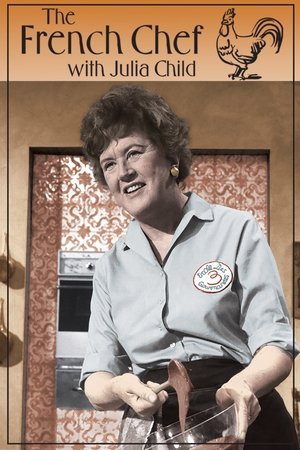
One of the first cooking shows on American television, created and hosted by Julia Child on public television to introduce the French way of cooking. It emphasized fresh ingredients, many of which were unfamiliar to Americans. Based on the books she co-authored, entitled Mastering the Art of French Cooking.

This do-it-yourself series features the creative talents and enthusiastic personality of the top-selling craft book author Mark Montano. The trend-setting former fashion designer and his guest experts create affordable, accessible and customizable projects for the whole family. Each episode allows Mark to explore a fun theme — from Halloween and Downton Abbey to Fashion Week.

Berlin, a city that wears its scars, has always welcomed outsiders. But it has also been a battleground invaded by the French, taken over by the Nazis, occupied by the Russians and then divided down the middle by competing ideologies in the Cold War.

"On the Level" is designed to help young people understand what is happening to them as they grow up and to encourage their active participation in the hard work of adolescence-reaching maturity through social and personal growth. The twelve programs dramatize common teenage concerns like love, stress, conflict. and changing relationships with family and friends. The problem situations stimulate reflection and discussion about alternative courses of action for different individuals: the many approaches to problems. the many solutions. Programs objectify personal experiences and feelings so that you and your students can analyze and discuss them with no threats to individual privacy. Programs show the interactions of different aspects of the self-emotional, physical. intellectual, social. Look especially for the physical health implications that have been built into each of the programs.

Chef Martin Yan explores the many aspects of how food and spices helped shape the history and culture of western China. In this culinary journey, he also examines daily life in the region - from a whirlwind tour of street snacks to a leisurely cup of tea at historical tea houses. Back in the kitchen, Yan demonstrates his own take on the flavors and dishes of western China.

Raymond Blanc believes becoming a good cook is all about mastering the basic techniques. Raymond taught himself to be a Michelin star chef. But first, he had to understand what happens to food when you cook it different ways. Once you know what is happening when you roast, fry, poach etc then you can cook anything. After forty years of trial and error, Raymond wants to share what he has learnt. Each week he takes a different technique and shows five delicious dishes using that technique. The recipes range from simple to ambitious and Raymond delivers it all in his easy, warm, inimitable way.

No description available.

No description available.

No description available.

No description available.

No description available.

Anime series based on the book by Antoine de Saint-Exupéry. The series showed the extended adventures of the Little Prince, Swifty The Space Bird, and the Rose Girl.

Four children encounter the magic powers of Psammead, the sand fairy.
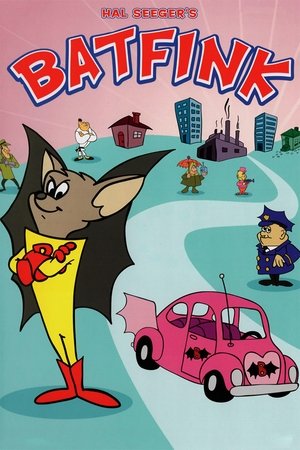
Batfink is an animated television series, consisting of five-minute shorts, that first aired in September 1967. The 100-episode series was quickly created by Hal Seeger, starting in 1966, to parody the popular Batman and The Green Hornet television series which had premiered the same year.

Teenagers Cyclops, Jean Grey, Rogue, Nightcrawler, Shadowcat, and Spike fight for a world that fears and hates them.

The world's most beloved animated characters as precocious preschoolers, discovering the world one baby step at a time.

Tom and Jerry Tales is an American animated television series featuring the cat-and-mouse duo Tom and Jerry.
Loading episode ratings...
This may take a moment for shows with many seasons.
60 episodes • 1979
| # | Episode | Air Date | Rating |
|---|---|---|---|
| 1 | Finding Alternatives: Why Bother? | Sep 17, 1979 | 0.0 |
| 2 | Finding Alternatives: Brainstorming | Sep 17, 1979 | 0.0 |
| 3 | Finding Alternatives: Blockbusting | Oct 1, 1979 | 0.0 |
| 4 | Finding Alternatives: You Can Remember | Oct 8, 1979 | 0.0 |
| 5 | Estimating and Approximating: Estimating | Oct 15, 1979 | 0.0 |
| 6 | Estimating and Approximating: Approximating | Oct 22, 1979 | 0.0 |
| 7 | Estimating and Approximating: Using Estimating and Approximating | Oct 29, 1979 | 0.0 |
| 8 | Estimating and Approximating: Find Your Guide | Nov 5, 1979 | 0.0 |
| 9 | Giving & Getting Meaning: What's the Meaning? | Oct 29, 1979 | 0.0 |
| 10 | Giving & Getting Meaning: Meaning is More than Words | Nov 19, 1979 | 0.0 |
| 11 | Giving & Getting Meaning: Remember the Audience! | Nov 26, 1979 | 0.0 |
| 12 | Giving & Getting Meaning: But What Does It Mean? | Dec 3, 1979 | 0.0 |
| 13 | Giving & Getting Meaning: The Bigger Picture | Dec 10, 1979 | 0.0 |
| 14 | Giving & Getting Meaning: Where Are You Coming From? | Dec 17, 1979 | 0.0 |
| 15 | Challenge #1: Time Capsule: Make a Present for the Future | Dec 24, 1979 | 0.0 |
| 16 | Collecting Information: What Do I Know? | Dec 31, 1979 | 0.0 |
| 17 | Collecting Information: Where Should I Go? | Jan 7, 1980 | 0.0 |
| 18 | Collecting Information: What Should I Do? | Jan 14, 1980 | 0.0 |
| 19 | Collecting Information: There are Ways to Remember | Jan 21, 1980 | 0.0 |
| 20 | Classifying: Classifying Objects | Jan 28, 1980 | 0.0 |
| 21 | Classifying: Classifying Information | Feb 4, 1980 | 0.0 |
| 22 | Classifying: Stereotyping People | Feb 11, 1980 | 0.0 |
| 23 | Classifying: There Are Many Ways to Go | Feb 18, 1980 | 0.0 |
| 24 | Finding Patterns: People Patterns | Feb 25, 1980 | 0.0 |
| 25 | Finding Patterns: Communication Patterns | Mar 3, 1980 | 0.0 |
| 26 | Finding Patterns: Cultural Patterns | Mar 10, 1980 | 0.0 |
| 27 | Finding Patterns: Nature's Patterns | Mar 17, 1980 | 0.0 |
| 28 | A Challenge: Search for the Unknown | Mar 24, 1980 | 0.0 |
| 29 | Generalizing: Drawing Conclusions | Mar 31, 1980 | 0.0 |
| 30 | Generalizing: Checking Conclusions | Apr 7, 1980 | 0.0 |
| 31 | A Tip: Practice for Success | Apr 14, 1980 | 0.0 |
| 32 | Sequencing & Scheduling: One Step at a Time | Apr 21, 1980 | 0.0 |
| 33 | Sequencing & Scheduling: Plan Ahead | Apr 28, 1980 | 0.0 |
| 34 | Sequencing and Scheduling: Calm Your Jitters! | May 5, 1980 | 0.0 |
| 35 | Using Criteria: What Are They? | May 12, 1980 | 0.0 |
| 36 | Using Criteria: Where Do You Get Them? | May 19, 1980 | 0.0 |
| 37 | Using Criteria: How Do You Change That? | May 26, 1980 | 0.0 |
| 38 | A Challenge: Design a Language | Jun 2, 1980 | 0.0 |
| 39 | Reshaping Information: Symbols | Jun 9, 1980 | 0.0 |
| 40 | Reshaping Information: More Than You Think | Jun 9, 1980 | 0.0 |
| 41 | Reshaping Information: Summarizing | Jun 16, 1980 | 0.0 |
| 42 | Reshaping Information: Maps and Models | Jun 23, 1980 | 0.0 |
| 43 | A Tip: Get Ahead with Goals | Jun 30, 1980 | 0.0 |
| 44 | Judging Information: Should I Believe It? | Jul 7, 1980 | 0.0 |
| 45 | Judging Information: What's Important? | Jul 14, 1980 | 0.0 |
| 46 | Judging Information: What's Enough? | Jul 21, 1980 | 0.0 |
| 47 | Judging Information: Point of View | Jul 28, 1980 | 0.0 |
| 48 | Judging Information: Persuasive Techniques | Aug 4, 1980 | 0.0 |
| 49 | A Tip: Make a Deal with Yourself | Aug 11, 1980 | 0.0 |
| 50 | Communicating Effectively: Styles of Communication | Aug 18, 1980 | 0.0 |
| 51 | Communicating Effectively: Planning a Presentation | Aug 25, 1980 | 0.0 |
| 52 | Communicating Effectively: Making a Presentation | Sep 1, 1980 | 0.0 |
| 53 | Communicating Effectively: Making Your Point! | Sep 8, 1980 | 0.0 |
| 54 | Communicating Effectively: Making It Come Alive | Sep 15, 1980 | 0.0 |
| 55 | A Challenge: Make Something New | Sep 22, 1980 | 0.0 |
| 56 | Solving Problems: One Thing Leads to Another | Sep 29, 1980 | 0.0 |
| 57 | Solving Problems: A Matter of Time | Oct 6, 1980 | 0.0 |
| 58 | Solving Problems: There's Always a Risk | Oct 13, 1980 | 0.0 |
| 59 | Solving Problems: Hanging in There | Oct 20, 1980 | 0.0 |
| 60 | Plan a City of the Future | Oct 27, 1980 | 0.0 |