
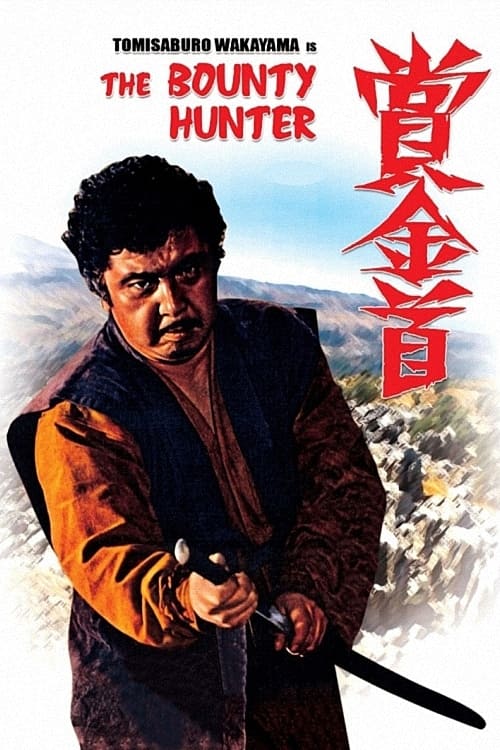
Continuing the adventures from the film series, Shikoro Ichibei is back with his cache of unique weapons and the quickest sword in all Japan. Having worked directly for the shogun in the past, he now runs a school in his secret identity as an educator. Meanwhile he takes on secret missions as ”The Bounty Hunter” (Shokin Kasegi). The touches of humor during the scenes around the school disappear once Ichibei takes on a contract. Powerful swordplay and brutal violence highlight these episodes as Japan’s greatest sword star Wakayama Tomisaburo stands tall against all odds in this dynamic television series.

Loading episode ratings...

Tomisaburō Wakayama
Shikoro Ichibei

Judy Ongg
Kagero

Nobuyuki Ishida
Sakurai Shinnosuke

In this gripping period drama, Matsudaira Ukon, the younger brother of the 11th Tokugawa Shogun Ienari, lives in the city as Yabutaro, a doctor in the Ukiyo Koji district, while fighting the evil that has infested the city of Edo.

The protagonist, Naito Samon, was secretly ordered by Tokugawa Ieyoshi, the 12th Shogun of the Tokugawa Shogunate, to begin a new era of reform by fighting evil in various disguises with his minions.

Musashi Miyamoto left his village and ended up fighting in the battle of Sekigahara with his friend Matahachi, but Musashi Miyamoto lost Matahachi. He goes back to the village to inform Matahachi's family about what happened. At the village, he is persecuted by people there. Musashi Miyamoto becomes worn down physically and mentally. At this time, Soho Takuan appears in front of Musashi Miyamoto. He then rebuilds his life with his sword. Musashi begins to travel for warrior training. He meets many masters of the sword and grows as a person.
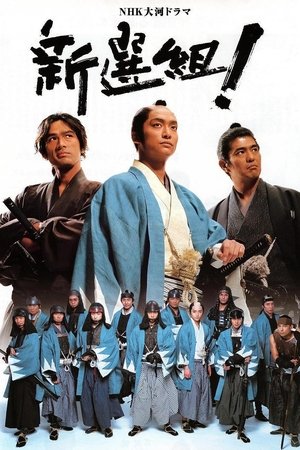
Shinsengumi! is a Taiga drama television series produced by Japanese broadcaster NHK. It was a popular drama about the Shinsengumi, a Japanese special police force from the Bakumatsu period.

Set in the Edo Period of Japan, the series follows a young ninja named Hayate, who is the son of a man who developed a special technique called the "Transformation Jutsu" capable of granting a superhuman form. However, their Ninja clan, the warmongering Blood Wheel Clan, begins using the Transformation Jutsu to spread fear and terror all throughout Japan as part of their campaign to conquer it, going against the peaceful intentions Hayate's father had when creating it. After the Blood Wheel Clan slaughter a village, Hayate is able to convince his initially reluctant father to perform the transformation procedure on him, enabling him to become a birdman ninja known as "Arashi" to defend people from the Blood Wheel Clan. Hayate's father is later murdered by the Blood Wheel Clan when they discover his betrayal, but Hayate himself escapes and teams up with the Iga Clan to fight and keep the Blood Wheel Clan from taking over Japan.

Shadow Warriors is a Japanese television jidaigeki show featuring Sonny Chiba that ran for four seasons in the early 1980s. Chiba played different ninja characters in each series. In the first series he played Hattori Hanzō III, in second one he played Tsuge Shinpachi, in the third one he played Tarao Hanzō, in the fourth series and in Bakumatsu Hen, he played Hattori Hanzō XV. In the 2003 direct-to-DVD series Shin Kage no Gundan he played Hattori Hanzō I.

A live-action adaptation that translates this deep legacy to the screen. Set in Kyoto at the end of the Edo period, the story depicts the intense and passionate lives of the Shinsengumi - the iconic samurai force that defended Kyoto in the final years of Japan's shogunate - through spectacular action and a bold interpretation based on historical facts. The story follows street brawler Toshizo Hijikata (Yuki Yamada), who finds a new kind of family in Isami Kondo and Soji Okita. Hijikata and his comrades in the Shinsengumi forge a bond of loyalty - tested by betrayal, illness, and war - as they fight not only their enemies but their own ideals.
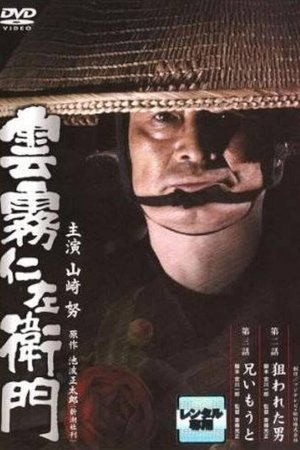
A Japanese television jidaigeki that was broadcast in prime-time in 1995 on Fuji TV. It is based on Shōtarō Ikenami's novel of the same title and stars Tsutomu Yamazaki. In the Kyōhō period, there was a group of bandits called Kumokiri from the people of Edo. Tokugawa shogunate appoints Abe Shikibu a head post of the Hitsuke Tōzoku Aratamegata to arrest Kumokiri clan.
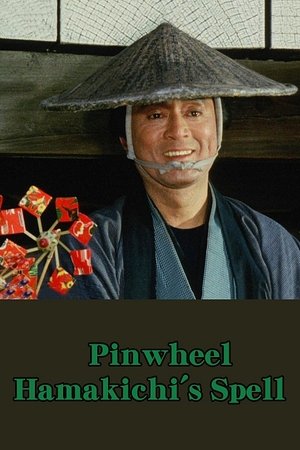
Nezu no Hamakichi used to be a renowned detective. He had lost his job and been banished from Edo after he was arrested for some reasons. Back in Edo for the first time in 5 years, he has just sold toys. This is a story that Hamakichi resolves difficult incidents.

Dobu, an unconventional detective, teams up with Yoriki Samon to solve crimes in Yaoyacho, Edo, showcasing their courage and detective skills.
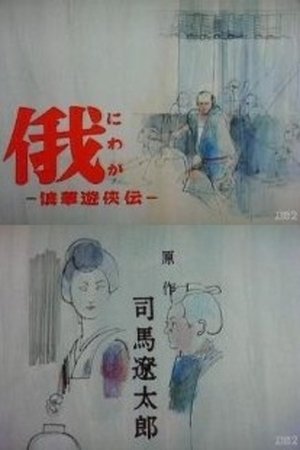
A dramatization of Ryotaro Shiba's novel of the same title about the life of Kobayashi Sahē, a chivalrous man who actually existed at the end of the Edo period.
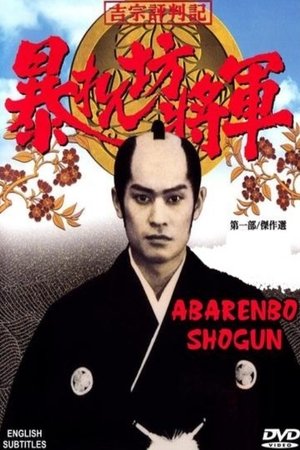
Set in the 18th century, the show follows the Shogun Yoshimune, who likes to disguise himself as a low-ranking samurai and go into his capital of Edo to see the life of the common man, as well as to seek out and punish evildoers who would hurt his citizens. He is aided by Magistrate Oo'oka and a vivacious fireman, Tatsugoro, as well as a rotating cast of other recurring characters. Along with Zenigata Heiji and Mito Kōmon, it ranks among the longest-running series in the jidaigeki genre. Like so many other jidaigeki, it falls in the category of kanzen-chōaku, loosely, "rewarding good and punishing evil."
Hasegawa is a chief police of big heart who leads a band of samurai police and cultivates reformed criminals as informants to solve difficult crimes.

Sakazaki Iwane is a ronin who spends idle days in Edo. Until a few months ago, he was a promising son and successor to a powerful family in Bungo. He has came back to Edo, where he lived for a while for swordplay training with his two best friends, after a tragedy in the three's home domain—both of the two friends died, one of them killed by Iwane by command of the domain lord's chief retainer. Iwane left his home for Edo, leaving behind his fiancée, a sister of the friend he killed. Eventually, Iwane detects the conspiracy behind the deaths of the two friends and struggles to reform his domain.
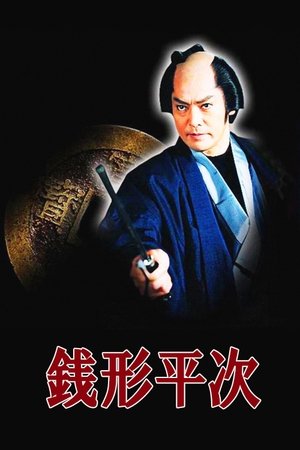
Heiji is an undercover policeman in the city of Edo. He possesses a superior skill of throwing coins. When a criminal is caught, Heiji throws coins at the offender and reveals his true identity. Like “Abarenbo Shogun,” “Mito Komon” and “Toyama no Kinsan,” “Zenigata Heiji” is about an official working undercover to catch criminals. The hero was created by novelist Kodō Nomura in 1931.
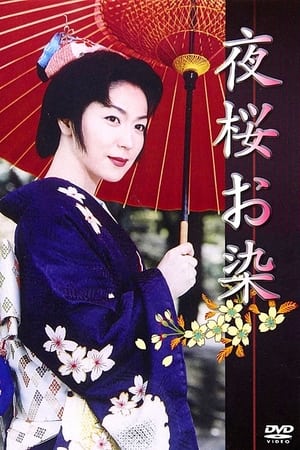
Osome is an ex-actress who lost her parents in a fire when she was 6-years old. She then is separated from her older brother, who goes missing. While she tries to investigate the fire that killed her parents, an officer, Yoshikawa reveals that her father used to be a shogunate spy. Osome decides to become a spy herself under Yoshikawa, to find the man who killed her parents and to seek out her lost brother.

It is the Edo period during the ninth Shogun Ieshige's reign. Orin's father was falsely accused of attempting to assassinate the former Shogun Yoshimune and in accordance with her father's wishes, Orin joins the secret assassination group Tegusari-nin, headed by Uemura Doestsu. In the organization, Orin fights through many dangers. But one day, she realizes she is being used by Doetsu in order to advance his ambition.
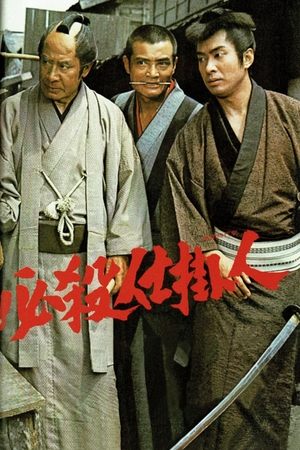
A shikakenin was an under-the-cover trade that undertook killing in Edo. Hanemon of Otowa, an agency that introduced laborers and maids, was also one of these. Katsugoro Iseya was a timber dealer who had come in as a client. His target was the constructions magistrate Hanno, and the Tatsumiya who sipped on the benefits. Hanemon who had a stong code towards killing, where he would only kill those who do no good to be in the world, accepts this request. Baian Fujieda, a needle doctor would carry out the killing. However, the professional killer Baian fails to bring down Tatsumiya. Hanemon then looks to another shikakenin, the ronin Sanai Nishimura for the role. Although Sanai's ability with the sword is good, he lives poorly in a tenement, and accepts this commission on the condition that it is kept a secret from his wife and child. Here, they close in on Hanno and Tatsumiya again...
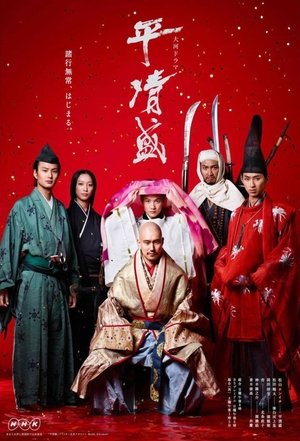
Villain or hero, Taira no Kiyomori changed Japanese history forever 900 years ago. Without ever knowing his real father, Kiyomori was raised as a samurai. Together with his stepfather, he wiped out piracy along Japan's western coast, becoming a full-fledged warrior samurai. In an age when samurai were looked down on as members of the lower class, Kiyomori was skillful at winning the hearts and minds of the people. By rounding up surrendered pirates and achieving other successes, Kiyomori eventually became the de facto ruler of Japan.
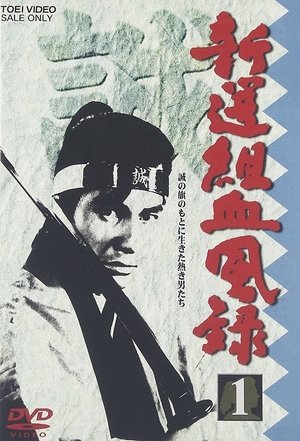
The arrival of Matthew Perry's Black Ships rudely awakened Japan from 300 years of isolation from the world. Men set their eyes beyond Japan and began to demand change in society. Old clashed with the new, and thus began an age of turmoil. Amidst this confusion, one group remained true to the old ways and risked their lives to preserve the traditional shogunate system. Led by their charismatic captain, Kondo Isami, the Shinsengumi upheld the code of honor of the samurai. Tales abound of the feats of men like Kondo, Hijikata Toshizo and Okita Soshi. In general, the passion and glory of these men who lived during these turbulent times in Japanese history are given exploration.
Loading episode ratings...
This may take a moment for shows with many seasons.
12 episodes • 1975
| # | Episode | Air Date | Rating |
|---|---|---|---|
| 1 | Soldiers With no Grave | Apr 6, 1975 | 0.0 |
| 2 | Episode 2 | Apr 13, 1975 | 0.0 |
| 3 | Episode 3 | Apr 20, 1975 | 0.0 |
| 4 | Episode 4 | Apr 27, 1975 | 0.0 |
| 5 | Episode 5 | May 4, 1975 | 0.0 |
| 6 | Episode 6 | May 11, 1975 | 0.0 |
| 7 | Episode 7 | May 18, 1975 | 0.0 |
| 8 | Episode 8 | May 25, 1975 | 0.0 |
| 9 | Episode 9 | Jun 1, 1975 | 0.0 |
| 10 | Episode 10 | Jun 8, 1975 | 0.0 |
| 11 | Episode 11 | Jun 15, 1975 | 0.0 |
| 12 | Episode 12 | Jun 22, 1975 | 0.0 |

Kon Omura
Kunai

Gorō Mutsumi
Kosaka

Minoru Ōki
Mochizuki Yataro

Renji Ishibashi
Katagiri Saburoji