

A shikakenin was an under-the-cover trade that undertook killing in Edo. Hanemon of Otowa, an agency that introduced laborers and maids, was also one of these. Katsugoro Iseya was a timber dealer who had come in as a client. His target was the constructions magistrate Hanno, and the Tatsumiya who sipped on the benefits. Hanemon who had a stong code towards killing, where he would only kill those who do no good to be in the world, accepts this request. Baian Fujieda, a needle doctor would carry out the killing. However, the professional killer Baian fails to bring down Tatsumiya. Hanemon then looks to another shikakenin, the ronin Sanai Nishimura for the role. Although Sanai's ability with the sword is good, he lives poorly in a tenement, and accepts this commission on the condition that it is kept a secret from his wife and child. Here, they close in on Hanno and Tatsumiya again...

Loading episode ratings...

Ken Ogata
Baian Fujieda

Yoichi Hayashi
Sanai Nishimura

So Yamamura
Hanemon Otowaya


During the 16th Century Japan was involved in the Sengoku Period, an era of Civil Wars and the powerful Warlords who fought them. One of the earliest and strongest of these men was the Great Lord TAKEDA Shingen. A tremendous military genius, his battles are the stuff of legend.

The 41st NHK Taiga Drama is Toshiie to Matsu. During the turbulent Warring States Era, one man's life and career intertwined with the three great generals of Japanese history-Nobunaga, Hideyoshi, and Ieyasu. With political savvy and the support of his fiercely loyal wife, Maeda Toshiie rose to second in power in the shogunate and built up a fiefdom that encompassed Echizen, Noto and Kaga.

The story is set in Edo's Fukagawa district, where the heroine, Oichi, dreams of becoming a doctor and assists her father, a physician named Shōan. Oichi possesses a special ability: she can hear the "voices" and see the "figures" of those who have passed away with unresolved regrets. With a cheerful and positive outlook, Oichi, together with a local police chief, delves into the darkness of human nature, solving mysteries along the way. While the story offers the thrill of a period mystery with unexpected culprits, it is also a coming-of-age tale of Oichi as she struggles and ultimately carves out her own path using her unique powers.

Story takes place three years before the movie Ooku.

Musashi Miyamoto left his village and ended up fighting in the battle of Sekigahara with his friend Matahachi, but Musashi Miyamoto lost Matahachi. He goes back to the village to inform Matahachi's family about what happened. At the village, he is persecuted by people there. Musashi Miyamoto becomes worn down physically and mentally. At this time, Soho Takuan appears in front of Musashi Miyamoto. He then rebuilds his life with his sword. Musashi begins to travel for warrior training. He meets many masters of the sword and grows as a person.
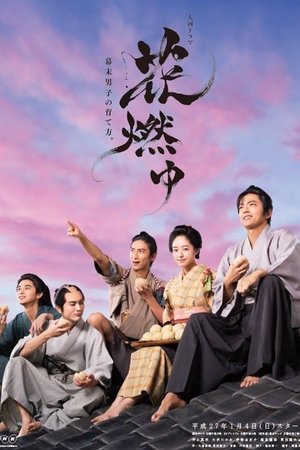
Fumi becomes Genzui Kusaka’s wife. During the turbulent times of the closing days for the Tokugawa shogunate, she lives positively and tries to keep up Shoin Yoshida's will. Shoin Yoshida is her older brother and intellectual.

A doctor whose mission is to save lives stands up for the weak in the midst of suffering and cuts down the evil that is the disease of the human world. Teruhiko Saigo plays the main character Arashiyama, who was born into the family of the Shogun's official doctor, but joined the Hayashi family as a son-in-law to save more people, and Azusa Watanabe plays his wife Misa, who is also a doctor.

In this gripping period drama, Matsudaira Ukon, the younger brother of the 11th Tokugawa Shogun Ienari, lives in the city as Yabutaro, a doctor in the Ukiyo Koji district, while fighting the evil that has infested the city of Edo.

Set in the mid-Edo period, this drama follows Sachi, who works as an apprentice at the Osaka Tenma kimono merchant Isuzuya and strives to carve a way to success despite the challenges she faces.

Collection of short stories about women in various periods of Japanese history. Based on famous Japanese novels.

Set in Japan several centuries back. It depicts the struggles of three historical warriors, Dosan Saito, Nobunaga Oda and Mitsuhide Akechi.

The protagonist, Naito Samon, was secretly ordered by Tokugawa Ieyoshi, the 12th Shogun of the Tokugawa Shogunate, to begin a new era of reform by fighting evil in various disguises with his minions.

During the reign of the shogun, Iemitsu, an epidemic causes the population of men to greatly drop, leading to an ooku where the role of men and women are reversed. Thus, “the women become the shogun, served by 3000 handsome men”

Set at the end of the 12th century when several wars for control of Japan disrupted a long era of peace, this tale of "Heike" (another name for the Taira clan) focuses on Taira Kiyomori who fights alongside other members of his clan to at first successfully overcome the Minamoto clan and their bid for power. Battles and intrigue abound, as the puppet Emperor and Buddhist monks take sides in the power struggle. At issue is Kiyomori's parentage, not an unusual problem for the nobility in that era where clandestine liaisons among courtiers and the upper classes were common.

The story chronicles the life of Yagyū Munenori.

Depicting Date clan’s internal strife that occurred during a peaceful Edo period governed by the 4th Tokugawa shogun.

The story chronicles the life of Nagao Kagetora.

The chronicles of the life of Minamoto no Yoshitsune (1159 - May 17th, 1189). He was a late Heian and early Kamakura general of the Minamoto clan of Japan. Yoshitsune was the ninth son of Minamoto no Yoshitomo. His older brother Minamoto no Yoritomo founded the Kamakura shogunate.

The Story is about three daughters of a "Hatamoto" during the end of the Edo period and the Meiji Restoration.

Based on the life of Hideyoshi Toyotomi (February 2, 1537 – September 18, 1598) a Sengoku period daimyo who unified Japan.
Loading episode ratings...
This may take a moment for shows with many seasons.
33 episodes • 1972
| # | Episode | Air Date | Rating |
|---|---|---|---|
| 1 | 仕掛けて仕損じなし | Sep 2, 1972 | 0.0 |
| 2 | Episode 2 | Sep 9, 1972 | 0.0 |
| 3 | Episode 3 | Sep 16, 1972 | 0.0 |
| 4 | Episode 4 | Sep 23, 1972 | 0.0 |
| 5 | Episode 5 | Sep 30, 1972 | 0.0 |
| 6 | Episode 6 | Oct 7, 1972 | 0.0 |
| 7 | Episode 7 | Oct 14, 1972 | 0.0 |
| 8 | Episode 8 | Oct 21, 1972 | 0.0 |
| 9 | Episode 9 | Oct 28, 1972 | 0.0 |
| 10 | Episode 10 | Nov 4, 1972 | 0.0 |
| 11 | Episode 11 | Nov 11, 1972 | 0.0 |
| 12 | Episode 12 | Nov 18, 1972 | 0.0 |
| 13 | Episode 13 | Nov 25, 1972 | 0.0 |
| 14 | Episode 14 | Dec 2, 1972 | 0.0 |
| 15 | Episode 15 | Dec 9, 1972 | 0.0 |
| 16 | Episode 16 | Dec 16, 1972 | 0.0 |
| 17 | Episode 17 | Dec 23, 1972 | 0.0 |
| 18 | Episode 18 | Dec 30, 1972 | 0.0 |
| 19 | Episode 19 | Jan 6, 1973 | 0.0 |
| 20 | Episode 20 | Jan 13, 1973 | 0.0 |
| 21 | Episode 21 | Jan 20, 1973 | 0.0 |
| 22 | Episode 22 | Jan 27, 1973 | 0.0 |
| 23 | Episode 23 | Feb 3, 1973 | 0.0 |
| 24 | Episode 24 | Feb 10, 1973 | 0.0 |
| 25 | Episode 25 | Feb 17, 1973 | 0.0 |
| 26 | Episode 26 | Feb 24, 1973 | 0.0 |
| 27 | Episode 27 | Mar 3, 1973 | 0.0 |
| 28 | Episode 28 | Mar 10, 1973 | 0.0 |
| 29 | Episode 29 | Mar 17, 1973 | 0.0 |
| 30 | Episode 30 | Mar 24, 1973 | 0.0 |
| 31 | Episode 31 | Mar 31, 1973 | 0.0 |
| 32 | Episode 32 | Apr 7, 1973 | 0.0 |
| 33 | Episode 33 | Apr 14, 1973 | 0.0 |
Yumiko Nogawa
Gin

Tamao Nakamura
Okura

Taisaku Akino
Senzô

Rumi Matsumoto
Omiyo

Hiroyuki Ôta
Mankichi