
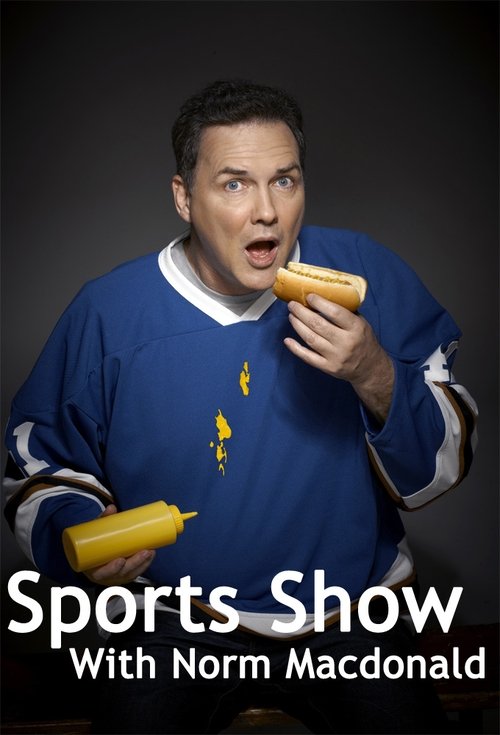
There's a new Norm in sports. Funnyman Norm Macdonald returns to the desk to give you an update on the week's dropped passes, foul balls and unnecessary roughness--and that's just what happened off the field. Sports, you've finally met your match.

Loading episode ratings...

Norm Macdonald
Himself - Host
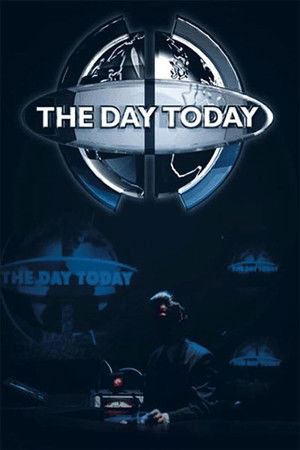
A spoof of the British news - including ridiculous stories, patronising vox pops, offensively hard-hitting research and a sports presenter clearly struggling for metaphors. Adapted from Radio 4 series 'On The Hour'.
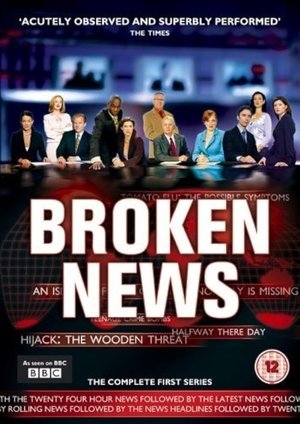
Broken News is a comedy programme shown on BBC Two in autumn 2005 and in Australia on SBS-TV from the 17 July 2006. The show poked fun at the world of 24-hour rolling news channels. The title of the show is a play on the phrase "breaking news". The show jump cut between its various spoof TV channels, which covered both the central story and other stories that would be of interest to their audience. A large part of the comedy came from observations about the nature of news presentation rather than the stories themselves.
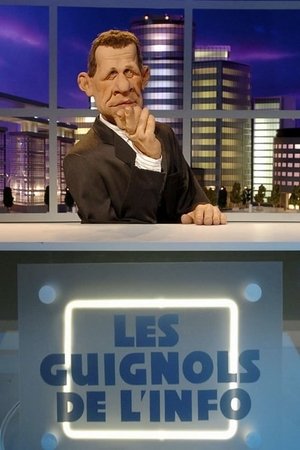
A parody of a newscast, the show is a caricature of the political world, the media, personalities or more generally of French society and the current world.

Hibiki Sakura’s love for food is starting to affect her size, but training at her local gym is pretty intimidating! After meeting her handsome personal trainer, Machio, Hibiki bites the bullet and starts her quest for a hot bod!
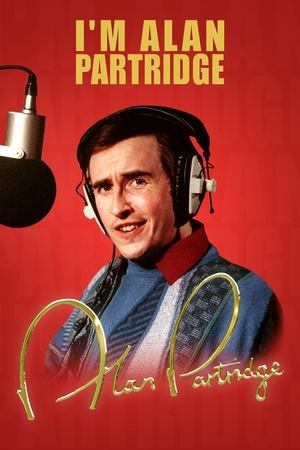
The fortunes of a former chat show host who is reduced to a lowly slot on Radio Norwich. Alan Partridge is divorced, living in a travel tavern, and desperate for a return to television.
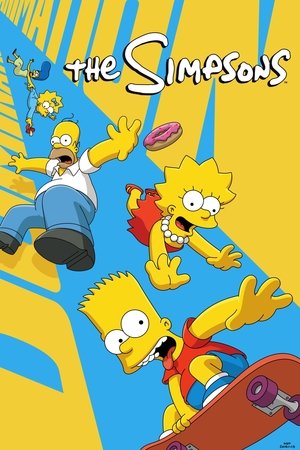
Set in Springfield, the average American town, the show focuses on the antics and everyday adventures of the Simpson family; Homer, Marge, Bart, Lisa and Maggie, as well as a virtual cast of thousands. Since the beginning, the series has been a pop culture icon, attracting hundreds of celebrities to guest star. The show has also made name for itself in its fearless satirical take on politics, media and American life in general.

No description available.
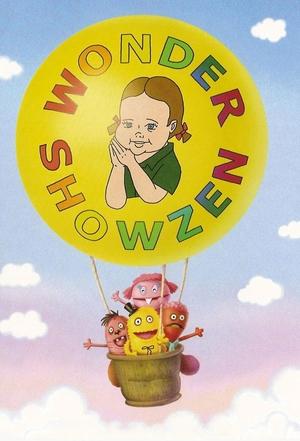
Wonder Showzen is an American sketch comedy television series that aired between 2005 and 2006 on MTV2. It was created by John Lee and Vernon Chatman of PFFR. The show is rated TV-MA. The show's format is that of educational PBS children's television shows such as Sesame Street and The Electric Company, parodying the format with adult-oriented content. In addition to general controversial comedy, it satirizes politics, religion, war, sex, and culture with black comedy. Every episode begins with a disclaimer, accompanied by the sound of someone screaming "Don't eat my baby!", which reads: "Wonder Showzen contains offensive, despicable content that is too controversial and too awesome for actual children. The stark, ugly and profound truths Wonder Showzen exposes may be soul-crushing to the weak of spirit. If you allow a child to watch this show, you are a bad parent or guardian."

Ball Four is a 1976 American situation comedy that aired on CBS in 1976. The series is inspired by the 1970 book of the same name by Jim Bouton. Bouton co-created the show with humorist and television critic Marvin Kitman and sportswriter Vic Ziegel. Bouton also starred in the series. Ball Four followed the Washington Americans, a fictitious minor league baseball team, dealing with the fallout from a series of Sports Illustrated articles written by Americans player Jim Barton. Like the book, the series covered controversial subjects including womanizing players, drug use, homosexuality in sports and religion. The series included a gay rookie ballplayer, one of the earliest regular gay characters on television. The trio began developing the series in 1975, looking to other series like M*A*S*H and All in the Family as models. CBS expressed interest and the creative team developed a script. CBS shot the pilot episode and ultimately bought the series. Ball Four aired at 8:30 PM Eastern time, which was during the Family Viewing Hour, an FCC-mandated hour of early evening "family-friendly" broadcasting. Consequently the writers had some trouble with the network's Standards and Practices in their attempt to portray realistic locker room scenes, especially the language used by the players. Pseudo-profanity such as "bullpimp" was disallowed, while "horse-crock" and "bullhorse" were approved.
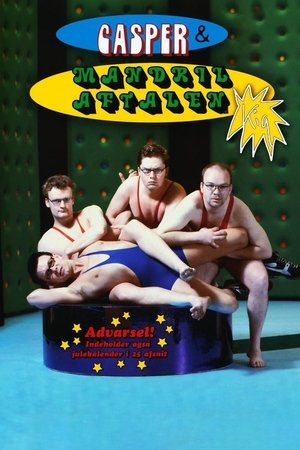
Casper & Mandrilaftalen was a Danish cult TV program aired on DR2 in 1999.
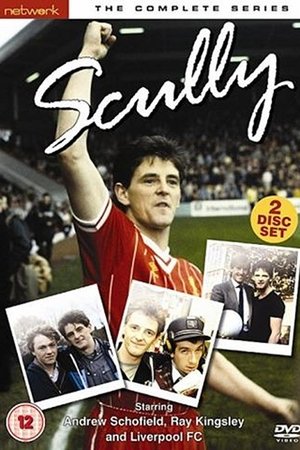
Scully was a British television drama with some comedy elements set in the city of Liverpool, England, that originated from a BBC Play For Today episode "Scully's New Years Eve". Originally broadcast on Channel Four in 1984, the single series was spread over six half-hour episodes plus a one-hour final episode. It was written by playwright Alan Bleasdale. The drama is notable for featuring many of the Liverpool football club first-team squad of that era. Francis Scully is a teenage boy who has his heart set on gaining a trial match for Liverpool to hopefully fulfil his ambition of playing for the club. Francis, in everyday situations during his waking hours, occasionally "sees" famous Liverpool players such as Kenny Dalglish when they are not really there. These dream-like sequences recur throughout the episodes. The main plotline is the efforts of Scully's school teachers to persuade Scully to appear in the school pantomime which they attempt by promising him a trial with his beloved Liverpool if he will cooperate. When Scully and his friends are not in school making trouble for the teachers and the school caretaker, they are seen roaming the local streets upsetting the neighbours and getting into trouble with the police. Scully sometimes has visions of the school caretaker appearing as a vampire due to the caretaker's nickname being Dracula. These frequent waking dream sequences give the show a somewhat surreal atmosphere.
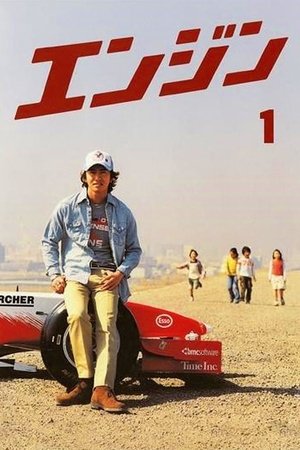
Jiro Kanzaki is an F3000 test driver blessed with acute sensitivity and breathtaking driving techniques. He's a daredevil who feels no fear driving at speeds that even top racers dare not attempt. But unexpected trouble forces this world-famous racer to leave his team and return to Japan for the first time in years. Until he finds a new job as a racer, Jiro decides to stay with his parents. What awaits Jiro there is his hardheaded father, his nagging sister, the 12 children of the foster home his father runs, a snobbish male nurse, and a stubborn female nurse who likes to daydream about her life.
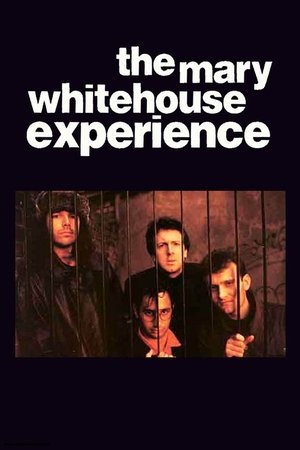
A topical comedy show, mixing stand-up with sketches and impressions, starring David Baddiel, Robert Newman, Hugh Dennis and Steve Punt.

No description available.

Kazamatsuri Shou's dream has always been to become a professional soccer player, but he has one problem: he's not very good at the game. He was accepted to the prestigious Musashi no Mori Junior High, known for its top rate soccer team, but he was never able to rise beyond the rank of third stringer. After transferring to Sakura Jousui Junior High, he can finally play soccer. And, with the support of his new friends and teammates, his strong determination, and lots of hard work, his soccer skills are developing rapidly and setting Shou well on his way to achieving his dream.
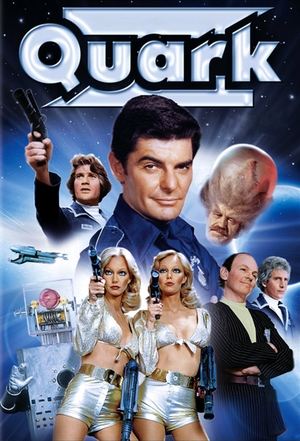
Quark is an American science fiction situation comedy starring Richard Benjamin broadcast on NBC. The pilot first aired on May 7, 1977, and the series followed as a mid-season replacement in February 1978. The series was cancelled in April 1978. Quark was created by Buck Henry, co-creator of the spy spoof Get Smart. The show was set on a United Galaxy Sanitation Patrol Cruiser, an interstellar garbage scow operating out of United Galaxies Space Station Perma One in the year 2226. Adam Quark, the main character, works to clean up trash in space by collecting "space baggies" with his trusted and highly unusual crew. In its short run, Quark satirized such science fiction as Star Wars, 2001: A Space Odyssey and Flash Gordon. Three of the episodes were direct satires of Star Trek episodes. The series won one Emmy Award nomination, for costume designer Grady Hunt's work in the episode "All the Emperor's Quasi-Norms, Part 2". The complete series was released on DVD on October 14, 2008.
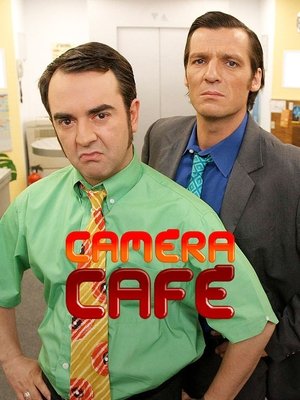
The coffee machine of a small company is the scene of discussions between employees. Private life, professional life, gossip, mockery, ... everything goes!
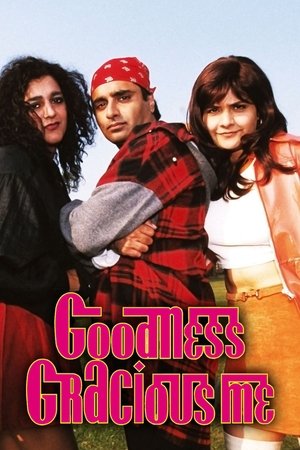
Goodness Gracious Me is a BBC English language sketch comedy show originally aired on BBC Radio 4 from 1996 to 1998 and later televised on BBC Two from 1998 to 2001. The ensemble cast were four British Indian actors, Sanjeev Bhaskar, Kulvinder Ghir, Meera Syal and Nina Wadia. The show explored the conflict and integration between traditional Indian culture and modern British life. Some sketches reversed the roles to view the British from an Indian perspective, and others poked fun at Indian stereotypes. In the television series most of the white characters were played by Dave Lamb and Fiona Allen; in the radio series those parts were played by the cast themselves. The show's title and theme tune is a bhangra rearrangement of a hit comedy song of the same name. The original was performed by Peter Sellers and Sophia Loren reprising their characters from the 1960 film The Millionairess. The show's original working title was "Peter Sellers is Dead", but was changed because the cast generally liked Peter Sellers. In her 1996 novel Anita and Me, Syal had referred to British parodies of Asian speech as "a goodness-gracious-me accent". One of the more famous sketches featured the cast "going out for an English" after a few lassis. They mispronounce the waiter's name, order the blandest thing on the menu and ask for twenty-four plates of chips. The sketch parodies often-drunk English people "going out for an Indian", ordering chicken phall and too many papadums. This sketch was voted the 6th Greatest Comedy Sketch on a Channel 4 list show.

Higashigaoka High School’s male swimming club presently has only three second-year members – leader Sakaki Shuhei, Shinozuka Daiki and Koganei Haruyoshi. They welcome the new school year with the aim of getting members.
2DTV is a British satirical animated television show that was broadcast on ITV in the United Kingdom from March 2001 to December 2004. Lasting a total of five series and thirty-three episodes, 2DTV became the successor of popular 80's TV series Spitting Image, and the predecessor of 2008 ITV satirical animation Headcases.
Loading episode ratings...
This may take a moment for shows with many seasons.
9 episodes • 2011
| # | Episode | Air Date | Rating |
|---|---|---|---|
| 1 | Pilot | Apr 12, 2011 | 0.0 |
| 2 | April 19, 2011 | Apr 19, 2011 | 0.0 |
| 3 | April 26, 2011 | Apr 26, 2011 | 0.0 |
| 4 | May 3, 2011 | May 3, 2011 | 0.0 |
| 5 | May 10, 2011 | May 10, 2011 | 0.0 |
| 6 | May 17, 2011 | May 17, 2011 | 0.0 |
| 7 | May 24, 2011 | May 24, 2011 | 0.0 |
| 8 | May 31, 2011 | May 31, 2011 | 0.0 |
| 9 | June 7, 2011 | Jun 7, 2011 | 0.0 |