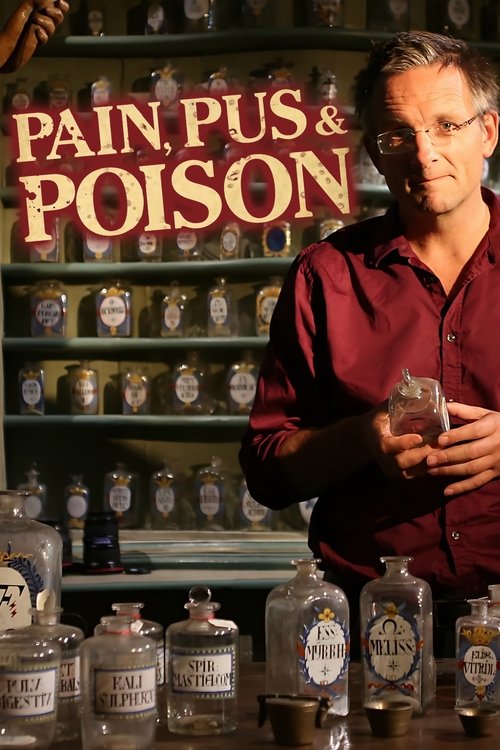
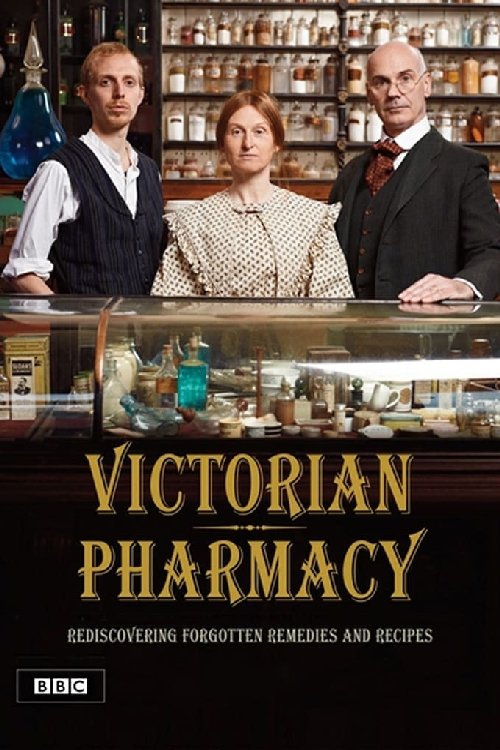


Victorian Pharmacy is a historical documentary TV series in four parts, first shown on BBC Two in July 2010. It was made for the BBC by independent production company Lion Television. It was filmed at Blists Hill Victorian Town in Shropshire. It is a historical documentary that looks at life in the 19th Century and how people attempted to cure common ailments. Since some of the ingredients of Victorian remedies are now either illegal or known to be dangerous, Nick Barber often uses his modern pharmaceutical knowledge to produce similar products without those ingredients. The other main presenters are Tom Quick, a PhD student, and Ruth Goodman, a domestic historian who also appeared in Tales from the Green Valley, Victorian Farm and Edwardian Farm.
Loading episode ratings...

Recounts the story of the extended royal family that once ruled the whole of Europe. Told through the eyes of Queen Victoria’s granddaughters, the series will combine premium scripted drama with a host of expert historians to tell the tale of one of the most compelling, powerful yet dysfunctional families in history.

Some people see their lives dramatically turned upside down because they waited for too long before seeking care. The documentary series showcases individual who should have rapidly consulted with a doctor when the first signs of illness appeared, before the situation became critical.

The series investigates Paolo Macchiarini’s claims to have invented a ground-breaking method to create new organs. His method using plastic tracheas sown with stemcells has been operated on patients in the US, Russia, Sweden and the UK. So far, unfortunately, the track record of his plastic organs is not very good. Almost all patients are dead. And several of his former surgeon colleagues in Sweden claim that not only does the method not work, but that his scientific claim to fame is based on falsified and misrepresented data. Some even claim that his patients have been used as human guinea-pigs.

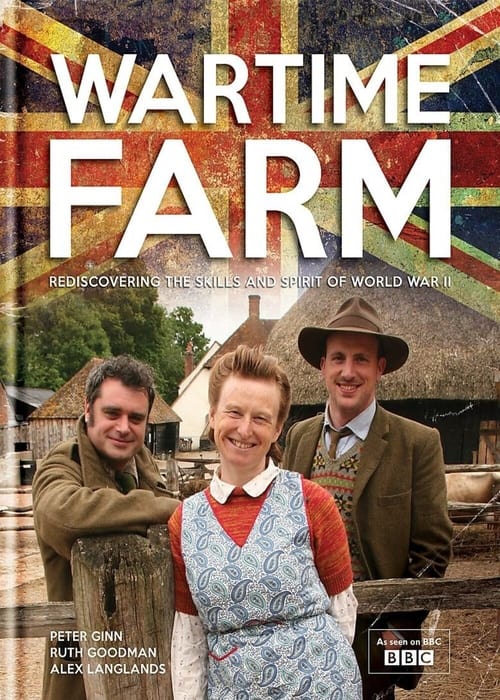
Edwardian Farm is an historical documentary TV series in twelve parts, first shown on BBC Two from November 2010 to January 2011. It depicts a group of historians trying to run a farm like it was done during the Edwardian era. It was made for the BBC by independent production company Lion Television and filmed at Morwellham Quay, an historic quay in Devon. The farming team was historian Ruth Goodman and archaeologists Alex Langlands and Peter Ginn. The series was devised and produced by David Upshal and directed by Stuart Elliott. The series is a development from two previous series Victorian Farm and Victorian Pharmacy which were among BBC Two's biggest hits of 2009 and 2010, garnering audiences of up to 3.8 million per episode. The series was followed by Wartime Farm in September 2012, featuring the same team but this time in Hampshire on Manor Farm, living a full calendar year as wartime farmers. An associated book by Goodman, Langlands, and Ginn, also titled Edwardian Farm, was published in 2010 by BBC Books. The series was also published on DVD, available in various regional formats.

The story of the aftermath of the Civil War and how the United States transformed into the “land of opportunity" spanning the years 1865 to 1890. Transporting into the violent world of cowboys, Indians, outlaws and law men, the story chronicles the personal, little-known stories of Western legends such as Jesse James, Billy the Kid, Wyatt Earp, Crazy Horse and Sitting Bull.

A long journey in 8 episodes to discover the human body, with Piero Angela who closely observes our organism, focusing each time on a theme: the eye, the ear, taste and smell, the stomach and the intestine, liver, bones, lungs and heart. How does our "wonder machine" work? To make each explanation direct and clear, the program uses films, animations and photographs developed with the scanning electron microscope.
The Body in Question is a landmark British medical documentary series of 13 shows made for the BBC. It was a groundbreaking show, being the first to ever televise an autopsy (in the final show on 29 Jan 1979). Dr Jonathan Miller considers the functioning of the body as a subject of private experience. He explores our attitudes towards our bodies, our ignorance of them, and our inability to read our body's signals. The first episode starts with vox populi asking where various organs in the body are located. By the final episode we are left in no doubt. Taking as his starting point the experience of pain, Dr Miller analyses the elaborate social process of "falling ill", considers the physical foundations of "disease" and looks at the types of individuals humankind has historically attributed with the power of healing. The series was nominated for two 1979 BAFTAs: Best Factual Television Series and Most Original Programme/Series.

Who really laced Tylenol with cyanide? This true-crime series examines alarming theories behind the unsolved killings — and tracks down a key suspect.

Join Ruth Mott and Harry Dodson as they show us how they managed during WW2.

In the heart of the modern East End of London, a Victorian slum has been recreated and a group of 21st-century people are moving in. Michael Mosley joins them to tell the extraordinary story of how the Victorian East End changed our attitude to poverty forever.

Historian Ruth Goodman and archaeologists Peter Ginn and Tom Pinfold turn the clock back 500 years to the early Tudor period to become tenant farmers on monastery land.

No description available.

This series travels the length and breadth of Britain to find out how the Victorians built Britain. It uncovers the incredible and surprising stories behind iconic landmarks; discovers the hidden heroes behind the epic constructions; and finds out how the incredible advances made by the Victorians forged the world we live in today.

No description available.

Hosted by Jason Silva, Origins: The Journey of Humankind rewinds all the way back to the beginning and traces the innovations that made us modern.
No description available.
Ian Hislop rescues the reputation of the maverick 'Do-Gooders' who he believes fixed the 19th century's version of 'broken Britain' in this new history series. Irresistibly easy to mock, these busy bodies are highly unfashionable today. But they are heroes to Ian - extraordinary men and women who precipitated the most remarkable period of social change in British history and, Ian argues, left us with a nation worth living in. And yet unlike notable Victorian royals, inventors, politicians and generals, many of them have been all but forgotten.

Michael Mosley embarks on three journeys to understand science's last great frontier - the human mind - as he traces the history of the attempts to understand and manipulate the brain.

A fascinating insight into the evolution of modern medicine as we explore the medical treatments for certain issues from past to present, seeing just how much we have learned through trial and error. The series is also a chance to see how medical advancements are currently used to treat problems in the fields of oncology, ophthalmology, dentistry, neurology, obstetrics and orthopaedics, and to see what the future may hold.

Dramatic documentary about the birth of the American Republic and the struggle of a loosely connected group of states to become a nation.
Loading episode ratings...
This may take a moment for shows with many seasons.
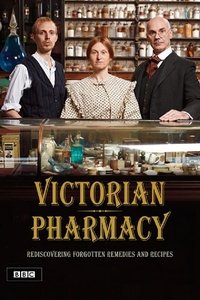
4 episodes • 2010
| # | Episode | Air Date | Rating |
|---|---|---|---|
| 1 | Episode 1 | Jul 15, 2010 | 0.0 |
| 2 | Episode 2 | Jul 22, 2010 | 0.0 |
| 3 | Episode 3 | Aug 5, 2010 | 0.0 |
| 4 | Episode 4 | Aug 12, 2010 | 0.0 |