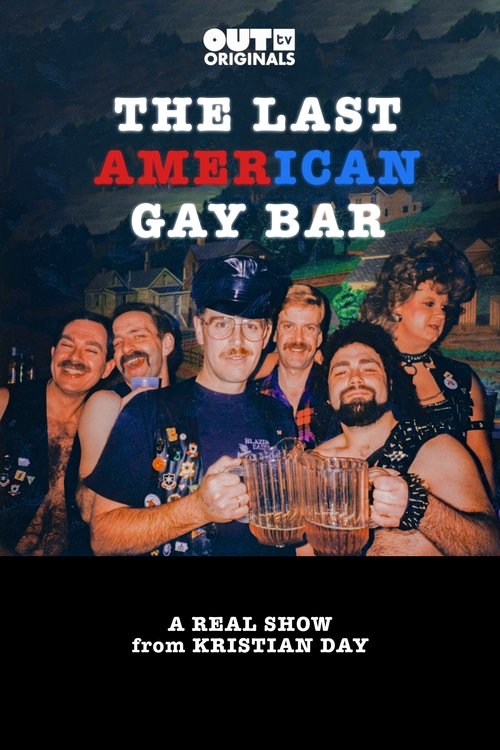


The story of Iowa's legendary Blazing Saddle and the community that built it.
Loading episode ratings...

Parts of Norway's queer history are seen through the eyes and hearts of more than 50 famous Norwegians.

Dives into the haunting 2012 double abduction of two cousins, 10-year-old Lyric Cook-Morrissey and 8-year-old Elizabeth Collins, in Evansdale, Iowa. With over seven years of exclusive access and insider interviews.

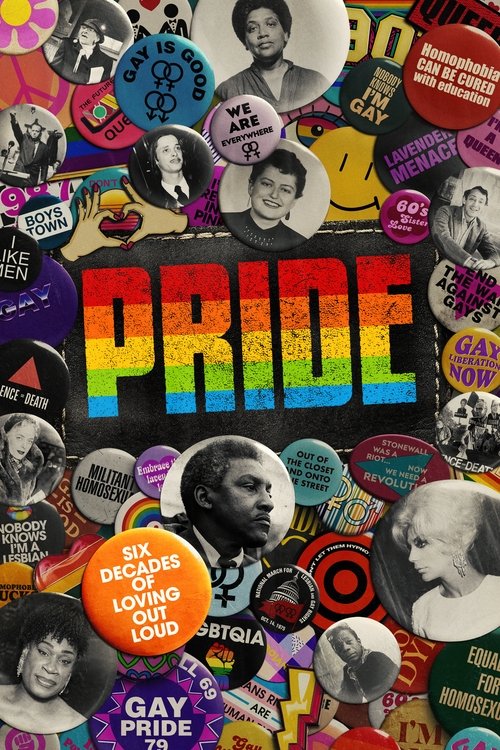
Six renowned LGBTQ+ directors explore heroic and heartbreaking stories that define America as a nation. The limited series spans the FBI surveillance of homosexuals during the 1950s Lavender Scare to the “Culture Wars” of the 1990s and beyond, exploring the queer legacy of the Civil Rights movement and the battle over marriage equality.

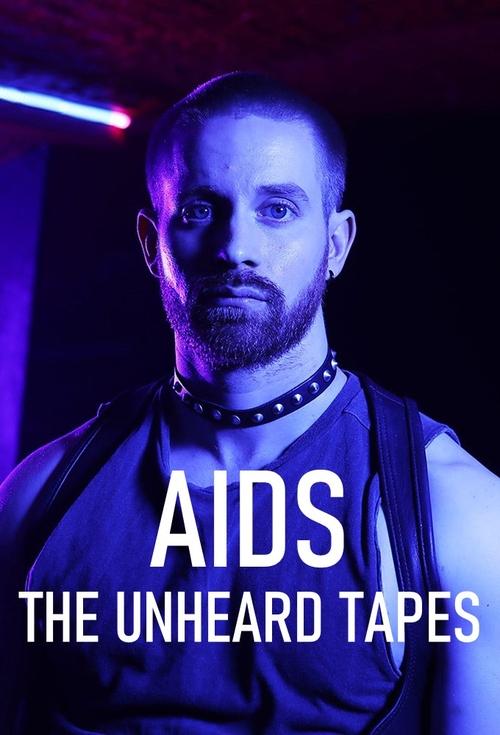
Real stories, real voices. The AIDS crisis as never told before, by those who survived - and those who did not. Frank, intimate accounts from the heart of a devastating epidemic.

The main feature of OBLS are the group of homosexual men and women, all Danes, who talk openly about their lives as homosexuals. Topics vary from coming-out stories to political discussions. The discussions are inspired by on-screen stats from a poll among 1600 Danish homosexuals. In addition, various sketches are performed, including lesbian-stereotype figure Alex and hairdressers Bjørn and Benny. Each episode closes with an ABBA lipsync performance by a special guest.

The definitive story of the Civil Rights era from the point of view of the ordinary men and women whose extraordinary actions launched a movement that changed the fabric of American life, and embodied a struggle whose reverberation continue to be felt today.

A look at the last five decades of African American history since the major civil rights victories through the eyes of Henry Louis Gates, Jr., exploring the tremendous gains and persistent challenges of these years.

An immersive 360-degree narrative telling the epic story of the Vietnam War as it has never before been told on film. Featuring testimony from nearly 80 witnesses, including many Americans who fought in the war and others who opposed it, as well as Vietnamese combatants and civilians from both the winning and losing sides.

Jack Roosevelt Robinson rose from humble origins to cross baseball’s color line and become one of the most beloved men in America. A fierce integrationist, Robinson used his immense fame to speak out against the discrimination he saw on and off the field, angering fans, the press, and even teammates who had once celebrated him for “turning the other cheek.” After baseball, he was a widely-read newspaper columnist, divisive political activist and tireless advocate for civil rights, who later struggled to remain relevant as diabetes crippled his body and a new generation of leaders set a more militant course for the civil rights movement.

n 2019, the virologists took center stage, and for the first time on film, their methods, miscues and tragedy they have wrought are put under the spotlight, revealing the extraordinary leaps of fantasy buried in their methodology, the contradictions quietly acknowledged in their papers, their desperate effort to change language to justify their findings, the obvious incongruence of their conclusions and the extraordinary stakes for our entire society in whether we continue to blindly follow their lead into a full-scale war against nature itself.

In 1998, pop star George Michael was arrested for a lewd act in a Los Angeles public toilet. This is the story of how his response to a potentially career-crushing event changed history.

A chronicle of five friends during a decade in which everything changed, including the rise of AIDS.

Paper Moon is a short-lived situation comedy which aired on ABC during the fall of 1974, starring Christopher Connelly and Jodie Foster in the roles of Moses Pray and his presumed daughter, Addie. The series is based on the 1973 Peter Bogdanovich film of the same name starring Ryan O'Neal and real-life daughter Tatum O'Neal, which was based on Joe David Brown's 1971 novel entitled Addie Pray.

Nicholas, a neurotic 25-year-old, hasn’t been particularly present in his siblings’ lives, but when their single dad reveals that he is terminally ill, the girls have to cope with not only a devastating loss but also the realization that Nicholas is the one who will have to rise to the occasion, move in and hold it all together.

An offbeat dramedy about a broke daycare worker and his escort boyfriend who try to make ends meet, while living with a scrappy old widow.

Eun-kyum is a rookie employee in his first year at work. He is diligent. full of charms, and gets along well with others. But because he values looks too much, Eun-kyum has been unsuccessful in love. This changes when his team leader shows up as his ideal type. But Eun-kyum is constantly irritated by Ji-hyuk because he gives him a hard time whenever he gets the chance

1988: A Brazilian flight attendant named Fernando jets between Rio and New York, loves many men, and lives life to the fullest. He ignores the fact that lots of people around him are contracting a mysterious illness. When he himself is diagnosed with HIV, he resolves to fight it. Taking a risk, he smuggles a drug out of the US and into Brazil, where it is illegal.

Pickers like Mike Wolfe and Frank Fritz are on a mission to recycle America, even if it means diving into countless piles of grimy junk or getting chased off a gun-wielding homeowner’s land. Hitting back roads from coast to coast, the two men earn a living by restoring forgotten relics to their former glory, transforming one person’s trash into another’s treasure.

I'll Fly Away is an American drama television series set during the late 1950s and early 1960s, in an unspecified Southern U.S. state. It aired on NBC from 1991 to 1993 and starred Regina Taylor as Lilly Harper, a black housekeeper for the family of district attorney Forrest Bedford, whose name is an ironic reference to Nathan Bedford Forrest, the founder of the Ku Klux Klan. As the show progressed, Lilly became increasingly involved in the Civil Rights Movement, with events eventually drawing in Forrest as well. I'll Fly Away won two 1992 Emmy Awards, and 23 nominations in total. It won three Humanitas Prizes, two Golden Globe Awards, two NAACP Image Awards for Outstanding Drama Series, and a Peabody Award. However, the series was never a ratings blockbuster, and it was canceled by NBC in 1993, despite widespread protests by critics and viewer organizations. After the program's cancellation, a two-hour movie, I'll Fly Away: Then and Now, was produced, in order to resolve dangling storylines from Season 2, and provide the series with a true finale. The movie aired on October 11, 1993 on PBS. Its major storyline closely paralleled the true story of the 1955 murder of Emmett Till in Money, Mississippi. Thereafter, PBS began airing repeats of the original episodes, ceasing after one complete showing of the entire series.

Fictionalized portrayal of the conflict and standoff in Kanehsatake during the summer of 1990. This major conflict between a Mohawk community and municipal, Quebec and Canadian governments was over the expansion of a golf course into an aboriginal cemetery. Based on the book by John Ciaccia (Quebec Liberal cabinet minister and negotiator) : The Oka Crisis, A Mirror of the Soul
Loading episode ratings...
This may take a moment for shows with many seasons.
6 episodes • 2024
| # | Episode | Air Date | Rating |
|---|---|---|---|
| 1 | 1960s: Stonewall and Vietnam | Jul 2, 2024 | 0.0 |
| 2 | 1970s: Scooping the Loop | Jul 10, 2024 | 0.0 |
| 3 | Violence in the Streets | Jul 17, 2024 | 0.0 |
| 4 | The War on AIDS | Jul 24, 2024 | 0.0 |
| 5 | Don't Ask Don't Tell | Jul 31, 2024 | 0.0 |
| 6 | Here and Now | Aug 7, 2024 | 0.0 |