

Crime & Punishment is a 2002 reality television, nontraditional court show spin-off of the Law & Order franchise. It premiered on NBC on Sunday, June 16, 2002, and ran through the summers of 2002, 2003, and 2004.
Loading episode ratings...

Theodore 'Teddy' Hoffman is a highly-regarded defense attorney in a prestigious Los Angeles law firm. Having successfully defended the wealthy but suspicious Richard Cross in a much-publicised murder trial, he is now involved in the defense of Neil Avedon, a famous young actor who has been suffering from severe drug and alcohol problems - and has been charged with the murder for which Cross was acquitted.

The inner workings of the judicial system, beginning with the arraignment, and continuing through the prosecutors' complicated process of building a case, investigating leads and preparing witnesses for trial.

The court system is corrupted and old-fashioned. People desire a new system that can satisfy the crowds. However, are the crowds always correct? The drama shows how judges discover the truth about people in court. It centers around a chief judge who doesn’t believe in justice, but only makes judgements that the crowds will be satisfied with. An assistant judge starts to question his motives and tries to find the truth.

Yamazaki Risako lives with her husband Yoichiro and 3-year-old daughter Fumika. One day, she receives a notification from the court that she has been selected as an alternate member of the jury for a shocking criminal case. The defendant in the case is Ando Mizuho, a full-time housewife who is the same age as Risako. She is on trial for causing the death of her 8-month-old daughter by dropping her into the bathtub. As a mother herself, Risako feels repulsed that Mizuho killed her own child. However, after the trial opens, Mizuho’s circumstances remind Risako of her own past and she soon becomes confused with the chaotic feelings that have lain dormant in her. (Source: jdramas.wordpress.com)

Caso Cerrado, formerly Sala de Parejas, is a Spanish-language court show broadcast by Telemundo in which Cuban-born lawyer Ana María Polo arbitrates cases for volunteer participants.

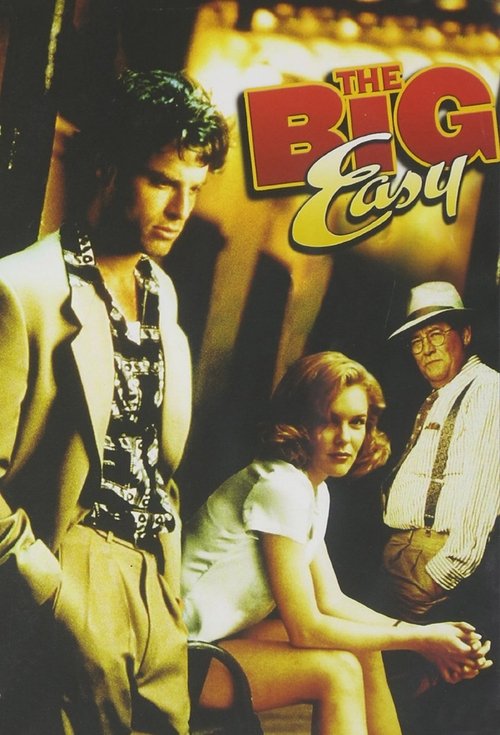
The Big Easy television series was inspired by the film of the same name from 1987. The show premiered on the USA Cable Network August 11, 1996. Tony Crane played New Orleans police lieutenant/detective Remy McSwain, Susan Walters played state district attorney Anne Osbourne and Barry Corbin played police chief C.D. LeBlanc. Daniel Petrie Jr. was the executive producer of the series. 35 episodes were broadcast over two seasons. The series takes place in New Orleans, Louisiana and was shot on location.

In this crime anthology series, viewers discover how an ordinary person got caught up in an extraordinary situation, ultimately revealing how one wrong turn leads to another, until it’s too late to turn back. Told from the defendant’s point of view, each episode opens in a courtroom on the accused without knowing their crime or how they ended up on trial.

John Thaw dons the silks as barrister James Kavanagh Q.C., one of the most highly respected criminal advocates in London, commanding admiration from colleagues and opponents alike. However, all this has come at a price as his dedication to work has taken its toll on his private life… Going beyond traditional courtroom dramas, “Kavanagh Q.C.” uncovers the pressures of legal battles and the problems of defining the truth, providing a compelling representation of the euphoric ups and costly downs of success and failure in the legal world.

A newcomer to the Supreme Court finds himself a pivotal force on an often deadlocked bench, frequently at odds over hot-button cases in this earnest but brief legal drama.
For the People is an American Legal drama that aired from July 21, 2002 until February 16, 2003.

With a genius-level IQ, Woo Young-woo learns to embrace her extraordinary self while forming a tight-knit community of friends and allies.

Many lawyers consider themselves prophets, but Eli Stone may be the real deal. Eli has built a successful career at a top law firm in San Francisco representing only the biggest and richest corporations that make a habit of screwing over the little guy. But after experiencing a series of odd hallucinations, Eli seeks to find a deeper meaning to life while trying not to lose his job and destroy his relationship with the bosses' daughter. When Eli discovers an aneurysm in his brain, he wonders if his condition is truly medical or if perhaps he now has a higher calling.

A sickly man with a strong mind has spent most of his childhood in a hospital. He is involved in a case of "double jeopardy," the principle that one cannot be tried for the same crime twice following either a conviction or an acquittal.

The People's Court is an American arbitration-based reality court show currently presided over by retired Florida State Circuit Court Judge Marilyn Milian. Milian, the show's longest-reigning arbiter, handles small claims disputes in a simulated courtroom set. The People's Court is the first court show to use binding arbitration, introducing the format into the genre in 1981. The system has been duplicated by most of the show's successors in the judicial genre. Moreover, The People's Court is the first popular, long-running reality in the judicial genre. It was preceded only by a few short-lived realities in the genre; these short-lived predecessors were only loosely related to judicial proceedings, except for one: Parole took footage from real-life courtrooms holding legal proceedings. Prior to The People's Court, the vast majority of TV courtroom shows used actors, and recreated or fictional cases. Among examples of these types of court shows include Famous Jury Trials and Your Witness. The People's Court has had two contrasting lives. The show's first life was presided over solely by former Los Angeles County Superior Court Judge Joseph Wapner. His tenure lasted from the show's debut on September 14, 1981, until May 21, 1993, when the show was cancelled due to low ratings. This left the show with a total of 2,484 ½-hour episodes and 12 seasons. The show was taped in Los Angeles during its first life. After being cancelled, reruns aired until September 9, 1994.

Matlock is an American television legal drama, starring Andy Griffith in the title role of criminal defense attorney Ben Matlock. The show, produced by The Fred Silverman Company, Dean Hargrove Productions, Viacom Productions and Paramount Television originally aired from September 23, 1986 to May 8, 1992 on NBC; and from November 5, 1992 until May 7, 1995 on ABC. The show's format is similar to that of CBS's Perry Mason, with Matlock identifying the perpetrators and then confronting them in dramatic courtroom scenes. One difference, however, was that whereas Mason usually exculpated his clients at a pretrial hearing, Matlock usually secured an acquittal at trial, from the jury.

A fast-paced character-oriented story, focuses on the lives and loves of the young assistant district attorneys in New York, following their career paths as these passionate but naive ADAs are confronted with tough, emotional cases that challenge their limited experience – and force them to mature quickly or be overwhelmed.

No description available.

Alice De Raey is a newly minted attorney who joins the chaotic world of criminal justice in Toronto. She's exposed to the seamier side of life, the backroom deals that make the system work accompanied by the usual eccentric characters.

I'll Fly Away is an American drama television series set during the late 1950s and early 1960s, in an unspecified Southern U.S. state. It aired on NBC from 1991 to 1993 and starred Regina Taylor as Lilly Harper, a black housekeeper for the family of district attorney Forrest Bedford, whose name is an ironic reference to Nathan Bedford Forrest, the founder of the Ku Klux Klan. As the show progressed, Lilly became increasingly involved in the Civil Rights Movement, with events eventually drawing in Forrest as well. I'll Fly Away won two 1992 Emmy Awards, and 23 nominations in total. It won three Humanitas Prizes, two Golden Globe Awards, two NAACP Image Awards for Outstanding Drama Series, and a Peabody Award. However, the series was never a ratings blockbuster, and it was canceled by NBC in 1993, despite widespread protests by critics and viewer organizations. After the program's cancellation, a two-hour movie, I'll Fly Away: Then and Now, was produced, in order to resolve dangling storylines from Season 2, and provide the series with a true finale. The movie aired on October 11, 1993 on PBS. Its major storyline closely paralleled the true story of the 1955 murder of Emmett Till in Money, Mississippi. Thereafter, PBS began airing repeats of the original episodes, ceasing after one complete showing of the entire series.

Judge Judy Sheindlin puts the American justice system on trial in a true crime high-stakes courtroom drama, as she and her expert legal team recreate the trials from notorious cases where following the letter of the law did not necessarily feel "just."
Loading episode ratings...
This may take a moment for shows with many seasons.
14 episodes • 2002
| # | Episode | Air Date | Rating |
|---|---|---|---|
| 1 | People v. Dailey | Jun 16, 2002 | 0.0 |
| 2 | People v. Jones | Jun 23, 2002 | 0.0 |
| 3 | People v. Vasquez | Jun 30, 2002 | 0.0 |
| 4 | People v. Sanabria | Jul 7, 2002 | 0.0 |
| 5 | People v. Curry | Jul 14, 2002 | 0.0 |
| 6 | People v. Scheirbaum (and) People v. Villa | Jul 21, 2002 | 0.0 |
| 7 | People v. Taitano | Jul 28, 2002 | 0.0 |
| 8 | People v. Garcia | Aug 4, 2002 | 0.0 |
| 9 | People v. Kayser (and) People v. Palomino | Aug 11, 2002 | 0.0 |
| 10 | People v. Wells | Aug 18, 2002 | 0.0 |
| 11 | People v. Scott (and) People v. Smith | Aug 25, 2002 | 0.0 |
| 12 | People v. Mayta | Sep 1, 2002 | 0.0 |
| 13 | People v. Redondo | TBA | 0.0 |
| 14 | #6 | TBA | 0.0 |
7 episodes • 2003
| # | Episode | Air Date | Rating |
|---|---|---|---|
| 1 | People v. Richard Arnold | Jun 1, 2003 | 0.0 |
| 2 | People v. Ron Barker/NY Nourn | Jun 8, 2003 | 0.0 |
| 3 | People v. Clifford Smith | Jun 15, 2003 | 0.0 |
| 4 | People v. Emile Robershaw | Jun 22, 2003 | 0.0 |
| 5 | People v. Joseph Villarino | Jun 29, 2003 | 0.0 |
| 6 | People v. Hugo Alcazar | Jul 6, 2003 | 0.0 |
| 7 | People v. Delia Contreras | Jul 13, 2003 | 0.0 |
6 episodes • 2004
| # | Episode | Air Date | Rating |
|---|---|---|---|
| 1 | People v. George Waller Jr. & Lawrence Calhoun | Jun 12, 2004 | 0.0 |
| 2 | PEOPLE V. BRENDA COOK & PEOPLE V. LAWRENCE MARSH | Jun 19, 2004 | 0.0 |
| 3 | PEOPLE V. BERNARD CUTTS | Jun 26, 2004 | 0.0 |
| 4 | PEOPLE V. TERRY HALL | Jul 3, 2004 | 0.0 |
| 5 | PEOPLE V. MCPHERSON, BUBECK & PEOPLE V. CHASTANG | Jul 10, 2004 | 0.0 |
| 6 | People V. Tianna Thomas & People V. Charles Mambane | Jul 17, 2004 | 0.0 |