

An examination of the events that lead up to the attack on Pearl Harbour.
Loading episode ratings...

The Lost Evidence is a television program on The History Channel which uses three-dimensional landscapes, reconnaissance photos, eyewitness testimony and documents to reevaluate and recreate key battles of World War II.

Documentary using recorded figures and statistics to outline the full extent of the conflict, explaining the horrors of war and how it ever came to take place.

Diaries, correspondence and family film recordings reveal a unique view of the life and privacy of the citizens of the so-called Protectorate of Bohemia and Moravia… Young documentarian Ondřej Veverka approached dozens of witnesses of the protectorate times and their descendants to share unique film recordings and written testimonies with him from that time. The result is a three-part documentary that provides a unique perspective on the protectorate. At that time, perhaps more than ever, amateur cameras noticed ordinary everyday things, small joys and ordinary life. Perhaps so that one can at least for a moment succumb to the illusion that the world is actually still in order. But soon tragedy entered these shots as well.
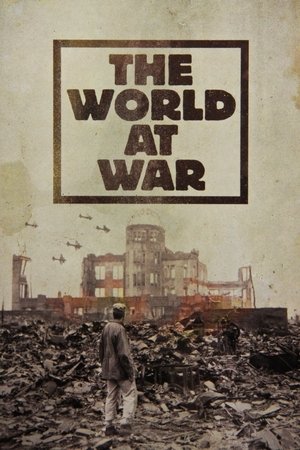
A documentary series that gives a historical account of the events of World War II, from its roots in the 1920s to the aftermath and the lives it profoundly influenced.

Dwight D. Eisenhower, John F. Kennedy, Lyndon B. Johnson, Richard Nixon, Gerald Ford, Jimmy Carter, Ronald Reagan and George H.W. Bush. This is the story of how their war experiences change them, how they emerge from conflict as leaders and how the crucible of war shapes the decisions they make when they reach the White House.
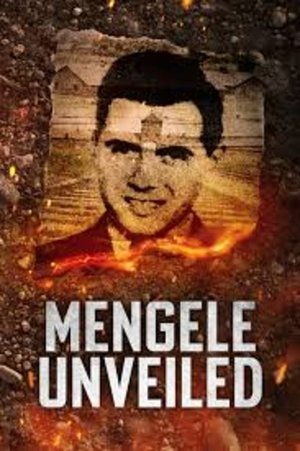
An analysis of the life of German officer and physician Josef Mengele, exploring his youth and studies, his adherence to Nazism, the inhumane experiments conducted at Auschwitz, and the connection between Nazism and the German academic system.

World War II was marked by its epic battles, which decided the fate of nations and changed the course of history. From Germany's Blitzkrieg attacks on Poland that launched the European campaign to the Allied invasion of Berlin that signaled its violent end, we bring these seminal conflicts to life through never-before-seen colorized combat footage. This six-part series puts you in the center of the action through rarely scene films from the frontline plus personal memoirs and oral histories from both sides of the battle lines.
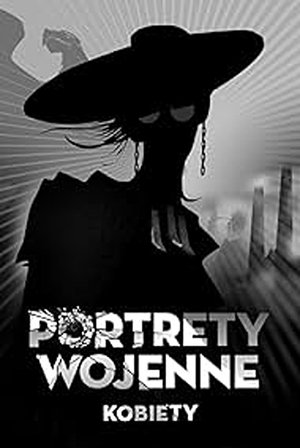
A documentary series about heroines of the II World War. Stories told from the perspective of the characters are full of emotions and tension, they show courage, sacrifice, willpower but also recklessness or pragmatism. Characters of the series are not flawless monuments but regular women with their own problems, who happened to play an important role in the history. The visual style of the project is animadoc. It comprises archival materials, interviews with experts, and sequences of fictionalised scenes: shots stylised as comic frames, where an actor is connected with scenography hand-drawn by comics illustrators.

A Total War is all encompassing, a war without boundary or limitation. It is a war of material and morale. A war that mobilizes, destroys and displaces civilian populations. The Second World War was a war in which massive armies advanced, confronting whole populations with impossible choices. The manufacture of weapons transformed industry and the workforce; area bombing campaigns reduced cities to rubble; sieges doomed populations to starvation; racial policies sponsored campaigns of genocide. Told through archive footage and expert interviews, we learn how WWII shattered the boundaries between home-front and battlefield.
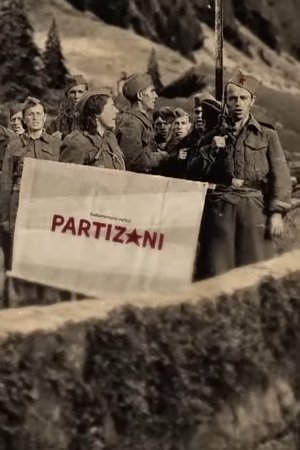
Who were the Yugoslav Partisans? A docuseries about the founding and evolution of the largest armed resistance in Europe during World War II.

Using witness testimony, archive and archaeological evidence, this three-part series reveals the untold story of the preparations to defend World War Two Britain by the Home Guard.

The Valiant Years was a documentary produced by ABC based on the memoirs of Winston Churchill, directed by Anthony Bushell and John Schlesinger, narrated by Gary Merrill and with extracts from the memoirs voiced by Richard Burton. It ran in the United States from 1960 to 1961, in 27 30-minute episodes and was broadcast in the UK by the BBC from February to August 1961. Its incidental music was written by Richard Rodgers, who won an Emmy for it in 1962. Scriptwriters included Victor Wolfson a dramatist and writer, Quentin Reynolds, William L. Shirer an American journalist, war correspondent and historian, and Richard Tregaskis. One of the program's London-based producers was actor Patrick Macnee, just prior to his being cast as secret agent John Steed in the long-running cult TV series The Avengers.,
AJP Taylor, the renowned historian, appraises the performance of World War Two leaders. In this series he delivers his lectures to camera and without an autocue.
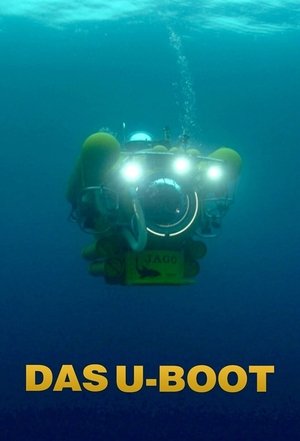
Submarines today are highly complex machines crammed with technology and weapons. As impressive as their construction is, as terrifying is their destructive power. Hardly any other weapon triggers as many emotions as the submarine. It strikes from ambush and can use nuclear missiles to drag the whole world into the abyss. Submarines originated from a completely non-military idea, namely to be able to view the world under water. But the interest in the military use of submarines soon prevailed.

Jungle Warfare in the 20th century, from WW2, to Malaya and Indonesia, to Vietnam and Cuba.

The epic television history of the Second World War’s Eastern Front giving an unprecedented Russian perspective on the war’s most decisive and bloody theater.

Documentary series charting the story of Queen Victoria after the death of her beloved husband Albert in 1861, examining how one-by-one her children rebelled against her and the family were touched by tragedy.

No description available.

With the aid of rare archives, this film retraces the bloody history of the SS, some of whose members are still alive and have accepted to speak.

This ground-breaking series examines the lives of the leading Nazis, in an effort to answer the question, why did it happen? It explores and tries to understand the incredible transformation of educated men into Nazi criminals, by charting the lives of six people who over the course of 20 years descend into moral oblivion.
Loading episode ratings...
This may take a moment for shows with many seasons.

16 episodes • 2002
| # | Episode | Air Date | Rating |
|---|---|---|---|
| 1 | America in the Pacific: The Clash of Two Cultures | Jan 15, 2002 | 0.0 |
| 2 | Radio, Racism And Foreign Policy | Jan 1, 2002 | 0.0 |
| 3 | Latin America: Intervention in Our Own Backyard | Jan 15, 2002 | 0.0 |
| 4 | Versailles: The Lost Peace | Jan 8, 2002 | 0.0 |
| 5 | War Comes to Pearl Harbor | Jan 15, 2002 | 0.0 |
| 6 | Return to Isolationism | Jan 22, 2002 | 0.0 |
| 7 | The First Salt Talks | Jan 29, 2002 | 0.0 |
| 8 | FDR And Hitler: Their Rise to Power | Feb 5, 2002 | 0.0 |
| 9 | The Great Depression And Foreign Affairs | Feb 12, 2002 | 0.0 |
| 10 | The Italian-Ethiopian War: Africa in World Affairs | Feb 19, 2002 | 0.0 |
| 11 | FDR and Churchill: The Human Partnership | Feb 26, 2002 | 0.0 |
| 12 | The Recognition of Russia: A Climate of Mutual Distrust | Mar 5, 2002 | 0.0 |
| 13 | The Phony War | Mar 12, 2002 | 0.0 |
| 14 | The Spanish Civil War | Mar 19, 2002 | 0.0 |
| 15 | Japan Invades China: Crisis in the Far East | Mar 26, 2002 | 0.0 |
| 16 | FDR and Hitler: The Dynamics of Power | Apr 2, 2002 | 0.0 |